

You work from your laptop. You move when you want. You've already figured out coworking, visas and time zones — but there's one skill that changes how you travel forever: scuba diving.
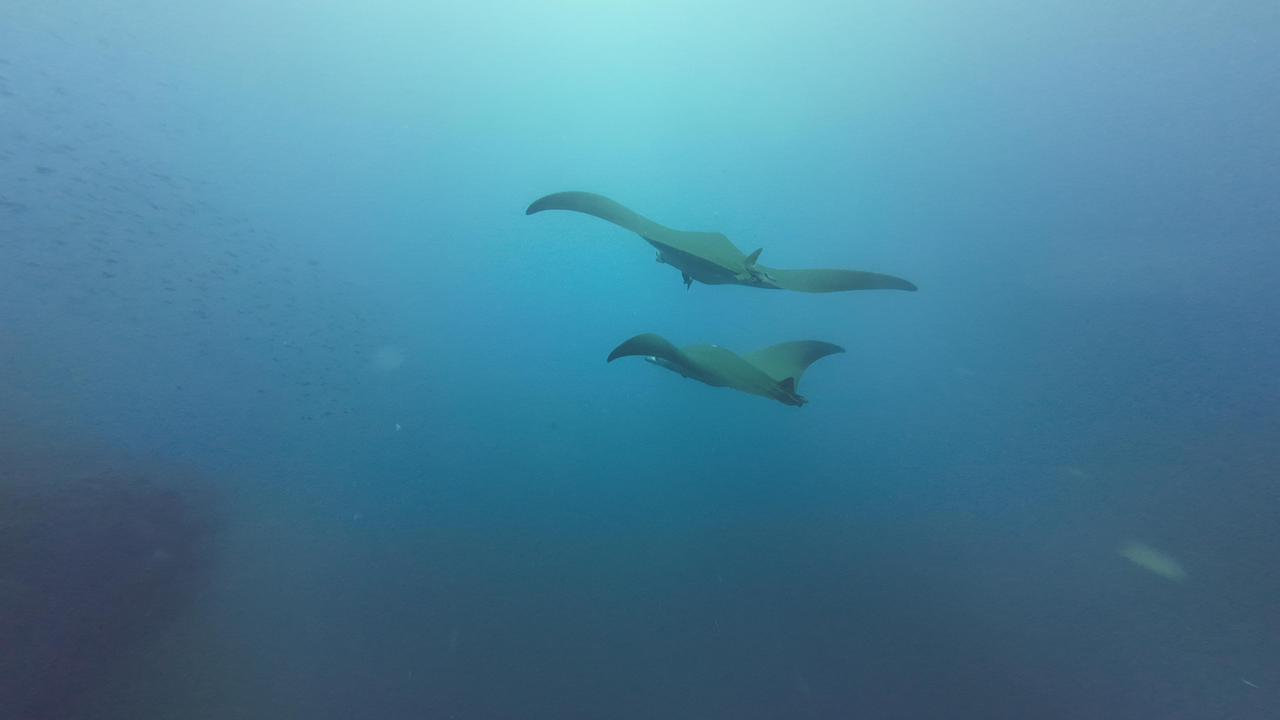
Imagine finishing a morning video call, walking two minutes to a PADI dive centre, and being underwater by lunchtime. A few days later you're a certified Open Water Diver — valid worldwide — and your nomad map suddenly includes reefs in Mexico, wrecks in Thailand, mantas in Indonesia and everything in between.
That's not a fantasy. It's exactly what we help people do at Cidade Velha Diving on Santiago Island, Cape Verde.
Why Cape Verde works for digital nomads
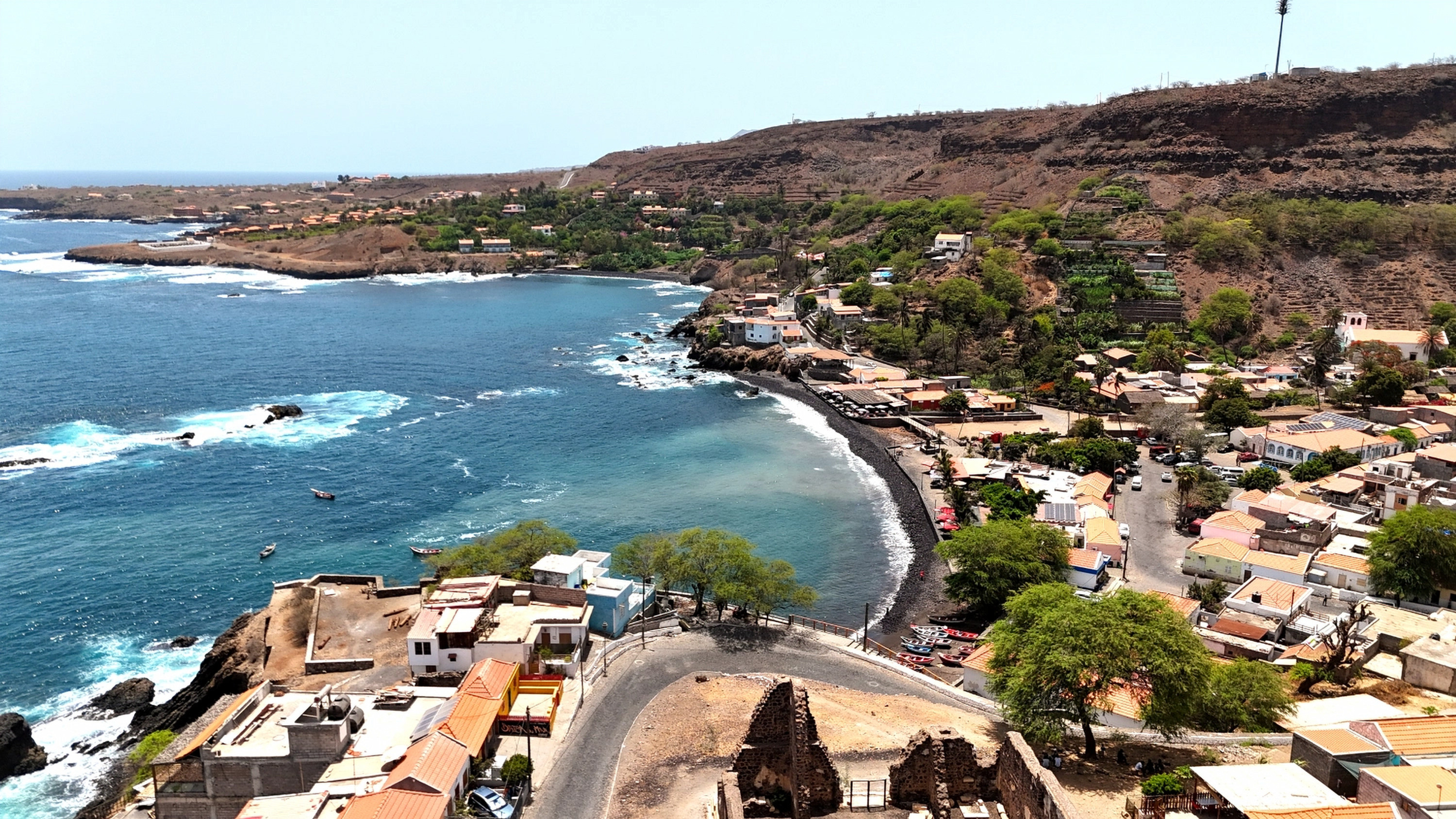
Cape Verde is still under the radar compared to the Canary Islands or Madeira — and that's part of the appeal. Living costs are reasonable, the climate is warm year-round, and Santiago (the main island) has real infrastructure: fibre internet in Praia, guesthouses and Airbnbs with solid Wi‑Fi in Cidade Velha, and a pace of life that lets you actually breathe between deadlines.
You're not squeezing a course into a rushed resort week. You can spread your training across several days, keep working in the afternoons, and still have time to explore the island.
Flexible schedules — we adapt to your calendar
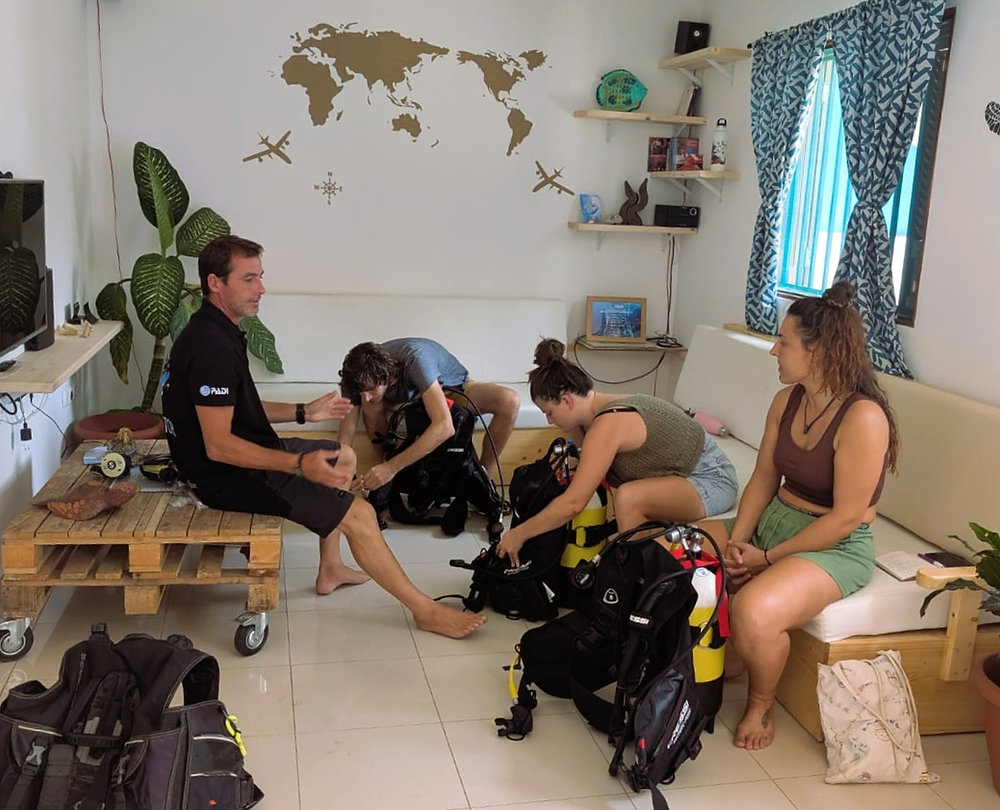
We're a small PADI dive centre, not a factory boat. That means we can usually adapt course times to your remote-work routine:
- Morning pool or confined-water sessions before the heat (and before your calls)
- Open-water dives when sea conditions are best — we pick the site, not a fixed conveyor belt
- Theory online (PADI eLearning) so you don't lose half a day in a classroom
- Extra days if weather or your workload needs it — no panic, no pressure
Tell us your constraints on WhatsApp and we'll propose a realistic plan. Many nomads do the Open Water in 3–4 days; others prefer a relaxed week. Both are fine.
Where to base yourself: Cidade Velha, Praia — or both
You've got options, and none of them require a car.
Stay in Cidade Velha (our village)
Cidade Velha is a UNESCO heritage site on the coast — quiet, walkable, and two minutes from our dive centre. Several guesthouses and Airbnbs have reliable internet (check reviews, or ask us — we know which places nomads have used happily). Perfect if you want to roll out of bed, dive, and be back for lunch.
See our guide: where to stay in Cidade Velha for divers — partner guesthouses, walking distances and what to expect.
Stay in Praia (city + coworking)
If you prefer a capital-city vibe, Praia has coworking spaces, more restaurants and a bigger expat scene. Cidade Velha is only 20–30 minutes by hiace (shared minivan, ~100–150 CVE). Many nomads work in Praia during the week and dive with us on selected mornings.
Full transport guide with map: how to get from Praia to Cidade Velha by hiace, taxi or car.
Why do your Open Water here?
We're biased — but we also wrote a whole article about it: why Cape Verde is one of the best places in the world for diving certification. Short version:
- Warm water (22–30 °C) all year — comfortable learning
- Uncrowded sites — we're the only regular PADI centre on Santiago; you're not fighting 20 tourists on the same reef
- Serious training — full PADI standards, no rushed "card mill"
- All-inclusive pricing — gear, theory, dives and certification in one clear fee (see prices)
Course details: PADI Open Water Diver in Cape Verde. Not ready for a full course? Start with a try-dive / Discover Scuba and see how you feel.
Courses in your language
Nomads come from everywhere. Our team teaches in English, Spanish and Portuguese — and we can often accommodate other requests if you ask in advance. Theory materials are available in many languages through PADI eLearning.
Just message us before you book and we'll confirm who'll be your instructor.
Get certified in days, dive the world for years
A PADI Open Water certification doesn't expire. Once you're qualified, you can join guided dives almost anywhere on the planet — and as a nomad, that's a superpower.
- Spend a month in Cape Verde, get certified, then head to Sal or Boa Vista for fun dives
- Fly to West Africa or Europe with a skill you'll use on every future trip
- Add Advanced, Rescue or specialties later if you fall in love with it (we offer those too)
You're not just ticking an activity off a list. You're opening a door — roughly 70% of the planet is ocean, and most people never see it. You will.
We can help you organise everything
Not sure how the pieces fit together? That's normal — you're arriving in a new country and trying to balance work and training. We can help with:
- Choosing between Praia and Cidade Velha for your dates
- Timing dives around your meetings or coworking hours
- Explaining hiace routes and where to get off near the centre
- Pointing you to guesthouses with good Wi‑Fi
- eLearning setup and what to bring (swimsuit, sunscreen — we provide the rest)
One WhatsApp conversation is usually enough to sketch a plan. No obligation, no hard sell.
Practical tips for nomad divers
- Download offline maps and save our hiace guide before your first trip from Praia
- Buffer one flex day in your calendar — Atlantic weather sometimes shifts a dive (we'll reschedule, not cancel your holiday spirit)
- Travel light — full scuba kit is included in course prices
- Combine with exploration — Tarrafal beach, Serra da Malagueta, or just wandering Cidade Velha's fort and pelourinho after a dive
Ready to add diving to your nomad toolkit?
Whether you're in Cape Verde for a month or passing through Santiago for two weeks — send us a WhatsApp. Tell us your work schedule, your experience (zero is fine), and your language. We'll reply with dates, prices and a plan that fits how you actually live.
Your laptop got you here. Let's get you underwater. 🤿